Vibe coding
gets physical.
A small survey of the keyboards trying to give AI coding a body: somewhere to glance, speak, pause and decide.
The keyboard was made for commands. Agent work has quietly introduced another rhythm: set direction, let work run, then return at exactly the moment a decision needs a human. These devices are early attempts to make that rhythm tangible.
None of them replaces a keyboard. The better question is whether a separate control makes a handoff clearer—and whether it stops speed from becoming accidental permission.
THE NEWEST VERSION OF THE IDEA
Codex Micro makes
the agent workspace
a physical surface.
OpenAI and Work Louder’s Codex Micro is a useful snapshot of where this category is heading. It is not a miniature laptop keyboard. It is a compact command center for the moments around agent work: seeing which agents are active, triggering a familiar workflow, and making a deliberate call without hunting through a stack of chats.
The appeal is specificity. Instead of treating every key as a generic macro, it gives the repetitive edges of the loop their own place—so the screen can stay for context, while the controller carries the actions that benefit from muscle memory.
Status, at a glance.
Live RGB feedback lets each Agent Key signal whether work is thinking, running, waiting, or complete. The point is not more light; it is less tab-switching when you are supervising several threads.
A short path to action.
Dedicated controls can keep accept, reject, push-to-talk, and a new chat close. The joystick can launch frequent skills such as a review, debug, or refactor flow.
Reasoning as a dial.
A rotary encoder for reasoning level is a quietly good interaction: stay quick when the task is ordinary, then ask for more depth when the decision is consequential.
$99 USD
VibeKeys Max
The most complete little control room.
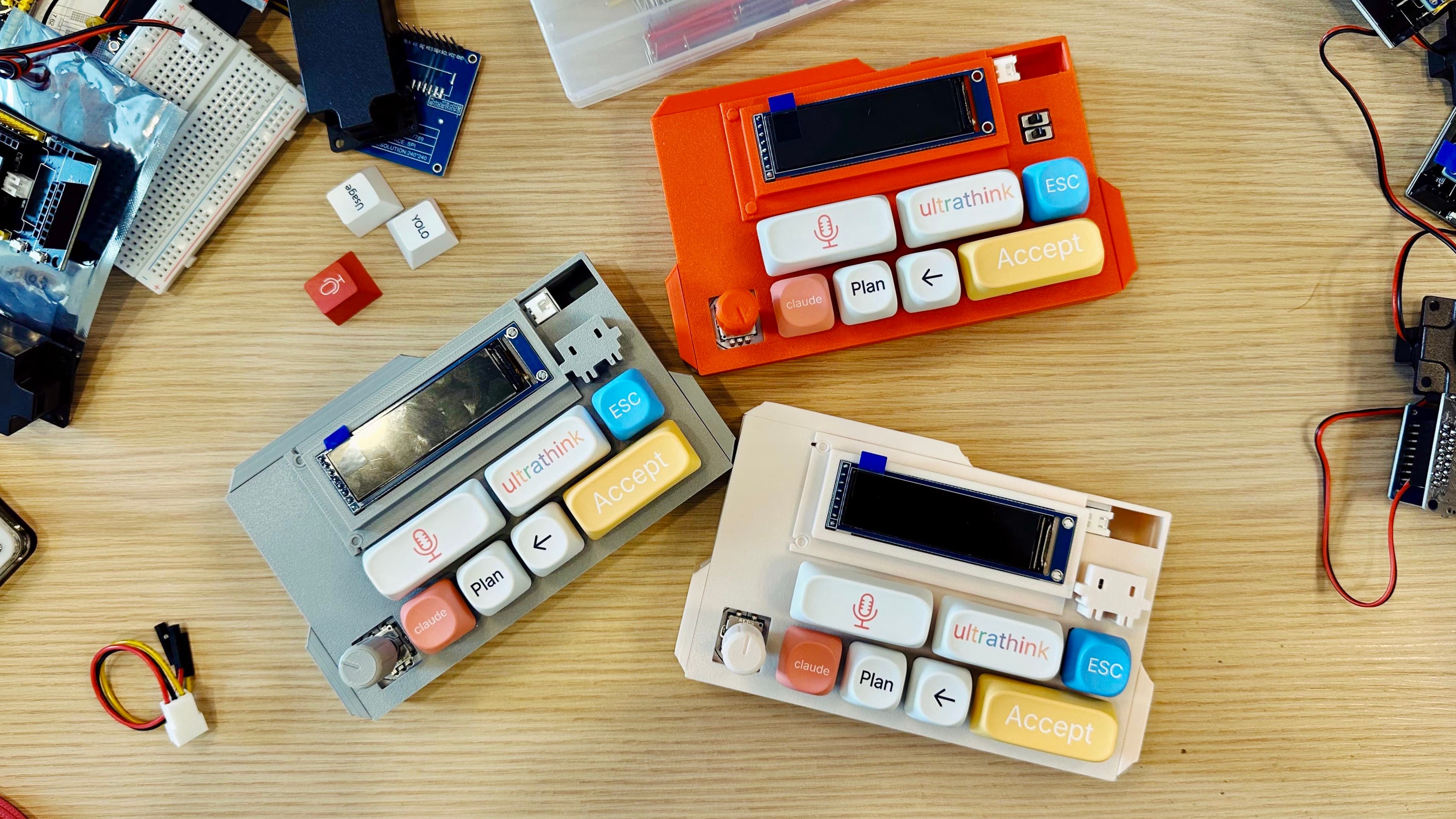
The Max treats agent work as something you should be able to see and interrupt from across the room. Its display, knob and built-in microphone make it more than a shortcut pad; it has a point of view about remote control. The open firmware and ordinary keyboard mode keep it useful even when the agent stack changes.
- TFT display for agent and build status
- Built-in microphone with Claude Code remote mode
- Bluetooth, Wi-Fi and USB-C connectivity
- Open-source firmware and fully remappable keys
$79.90 USD
AhaKey X1
The sharpest take on the approval loop.
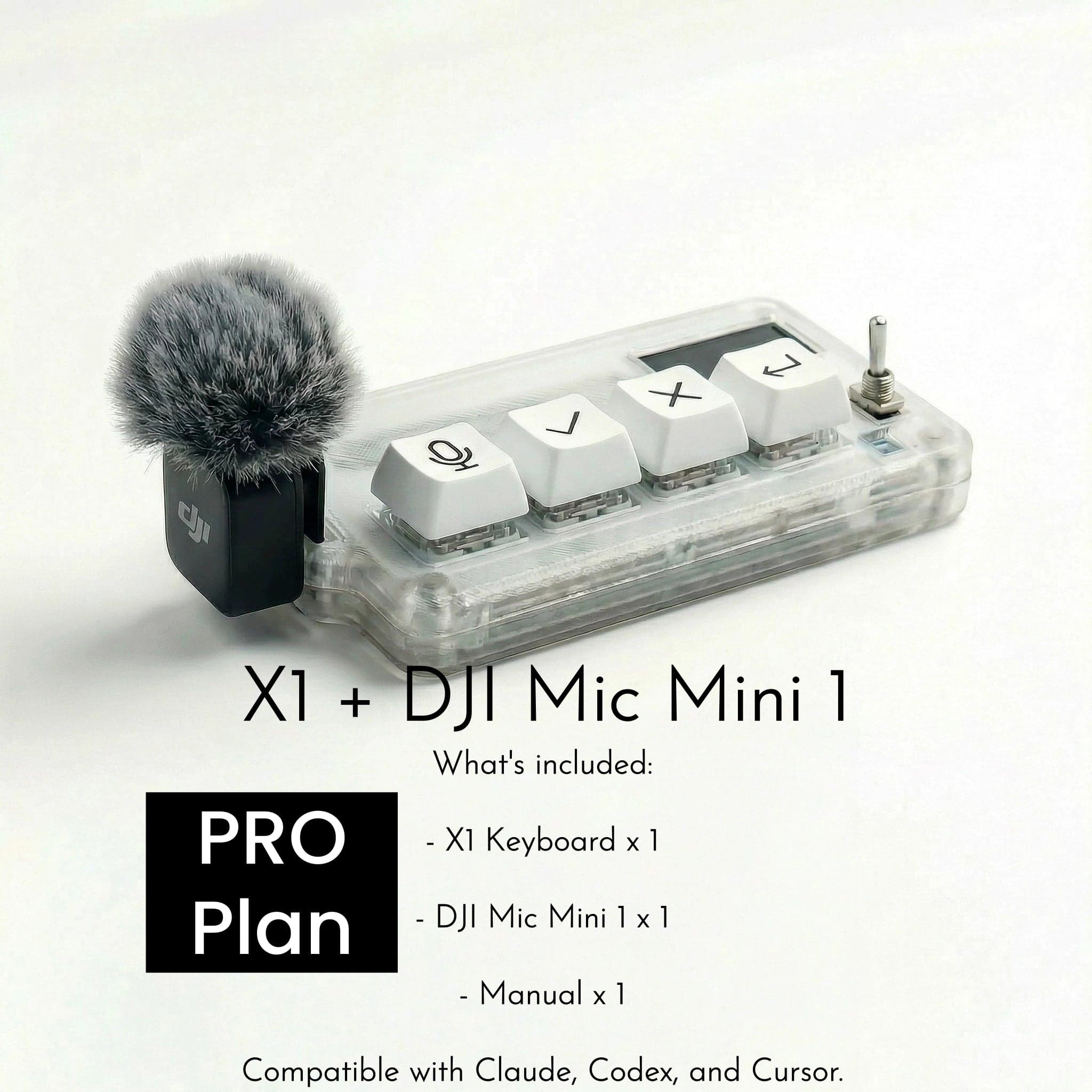
The AhaKey is all restraint: four keys, a status display and a metal toggle. Its best idea is not voice input but the sequence around it—speak, inspect, then deliberately confirm or cancel. This is the one for people who want an agent to feel less like an open tab and more like a tool with a safety catch.
- Four tactile controls for mic, review, cancel and confirm
- Status display and metal toggle
- Whisper-level voice input
- USB-C and Bluetooth for Mac and Windows
$198 USD
Creator Micro 2
The flexible base camp.
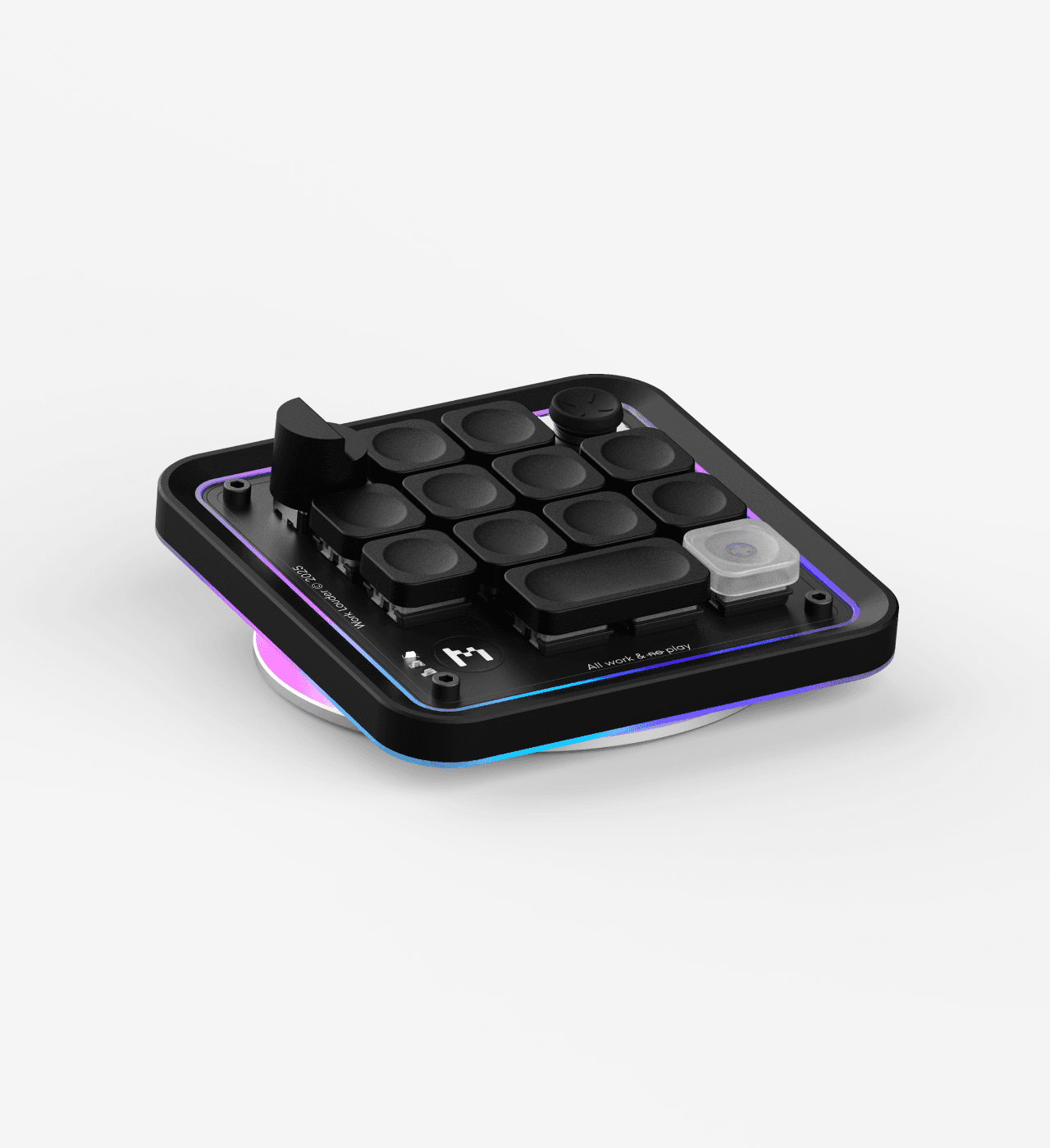
Work Louder’s compact controller is the least prescriptive option here. Thirteen keys, a knob, joystick, touch sensor and six layers make it closer to a tiny programmable instrument than a finished agent appliance. That is precisely why it appeals: it can grow into the exact set of controls your workflow actually earns.
- Thirteen mechanical keys across six programmable layers
- Rotary encoder, planar joystick and touch control
- Wired Base and wireless Pro configurations
- General-purpose surface that can evolve with the workflow
RELATED: OpenAI × Work Louder: Work Louder
THE COMPARISON
Four devices.
Four different jobs.
Choose Codex Micro if Codex is already the center of your workflow and live agent state matters most.
Choose VibeKeys Max if you want voice, a display, open firmware, and the freedom to step away from the desk.
Choose AhaKey X1 if the smallest possible speak-review-approve loop is the point.
Choose Creator Micro 2 if you would rather design your own control scheme than inherit somebody else’s.
THE TAKE
Physical controls make the most sense at the edges of autonomy: starting a task, checking its state, and choosing whether it may continue. That is a narrow role—and a good one. The compelling device is not the one with the most agent buttons. It is the one that makes the next human decision obvious.
LATEST WEEKLY
Keep the signal
close.
One considered developer dispatch each week. No flood, just the things worth carrying forward.
JOIN THE WAITLIST